Employment & Labor Alert — Oklahoma Amends Workplace Drug Testing Law: Key Changes and Next Steps
Oklahoma has passed HB 3127, updating its Medical Marijuana and Patient Protection Act (Okla. Stat. Tit. 63, § 427.8) effective November 1, 2026.

Oklahoma has passed HB 3127, updating its Medical Marijuana and Patient Protection Act (Okla. Stat. Tit. 63, § 427.8) effective November 1, 2026.
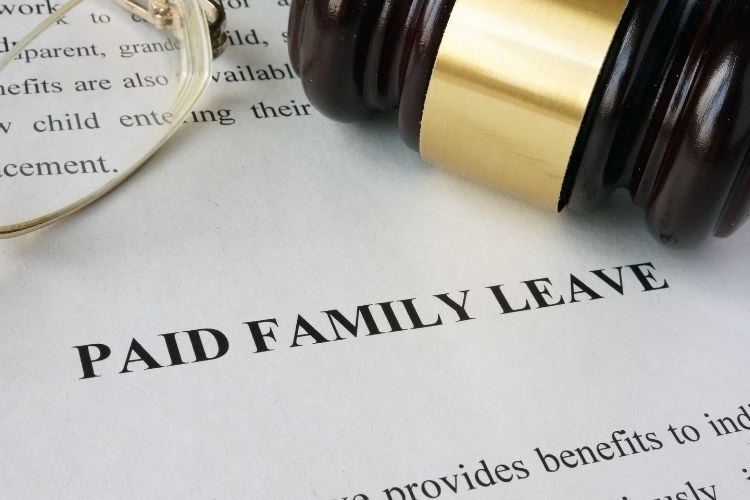
Oklahoma legislators are considering SB 277, a proposal that would create a state-run paid family and medical leave insurance program known as the Oklahoma State Paid Family and Medical Leave Insurance Act.

The recent Griffin/Stryker litigation shows that for multi state employers, outcomes may turn not only on what a restrictive covenant says, but also on forum selection, governing law, and the employer’s ability to prove protectable interests and irreparable harm early.
Hiring decisions carry significant risks. A poor fit can lead to lost time, increased costs, and disruption to culture and operations.
Pendergraft v. Steiner (W.D. Okla. 2025) shows HR and managers what NOT to do in hiring, promotions, and handling employee complaints.
If your company requires employees to sign mandatory arbitration agreements (and you should), here’s a wake‑up call: if you (the employer) didn’t sign it, too, then it may not be worth the paper it’s printed on.
Now is the time for employers to ensure they have policies and practices in place to document their legitimate business reasons for any adverse employment decisions.
This Alert discusses six important lessons learned for HR and employment lawyers based on a new decision by Magistrate Judge Little of the Northern District of Oklahoma.